




Hip pain has a way of taking over the small stuff. Putting on socks, getting off the bed, taking the stairs to your own flat. When tablets and physiotherapy no longer help, surgeons often bring up anterior hip replacement. Most people ask about it aren't afraid of the operation. It's the weeks afterwards that worry them. How much will it hurt? When can I manage without a walker? When do I get my routine back? Once you know what each stage looks like, those questions feel a lot less heavy. If you're reading up on Anterior Hip Replacement Treatment in Ahmedabad, here's what recovery usually involves.
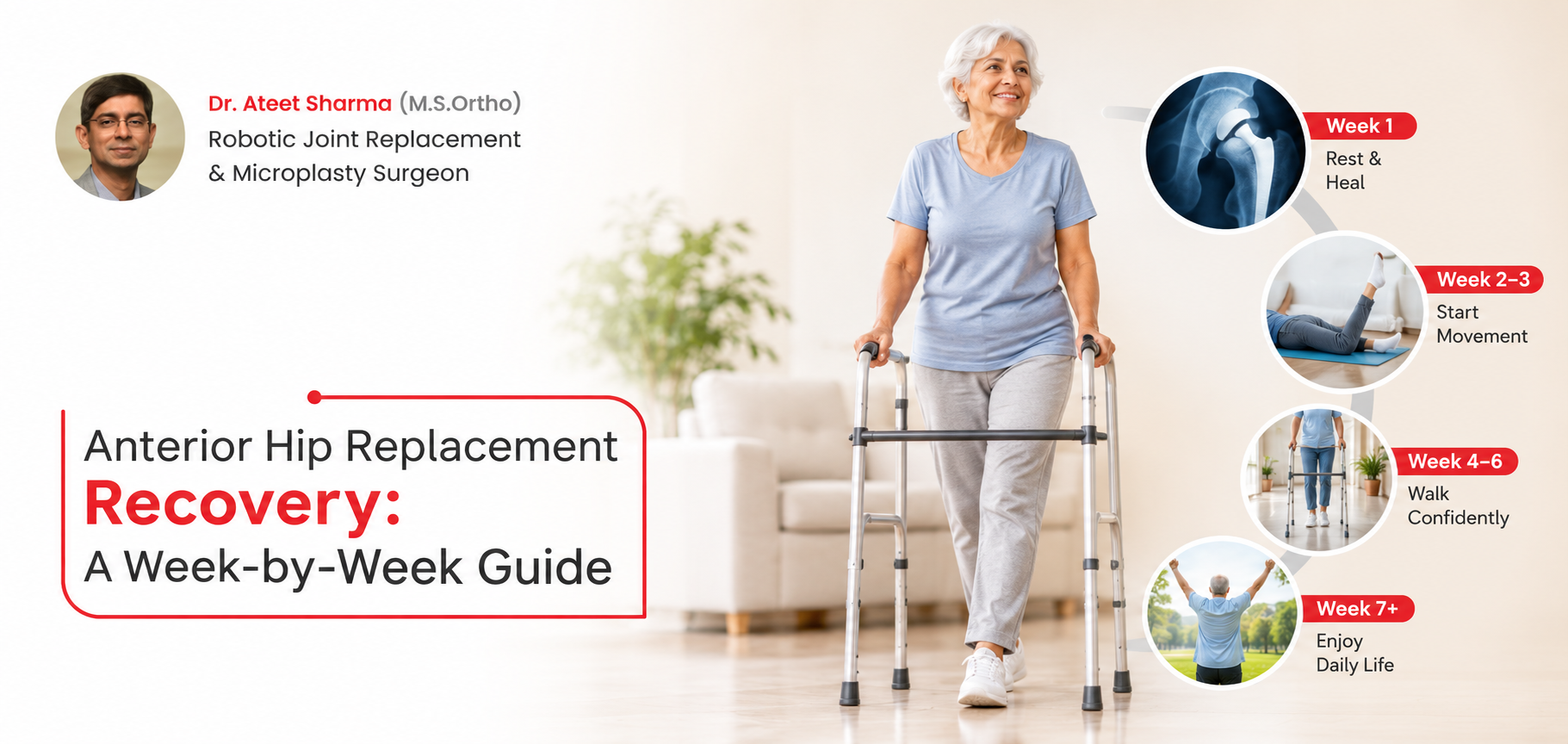
The surgeon replaces your damaged hip joint with an artificial one, entering from the front of the hip. The path runs between muscles rather than through them. That's a big reason some people are up and moving so soon.
Standing and taking a few supported steps within a day is common. Walking isn't the whole story, though. The muscles around the hip have to rebuild, and your body needs time to get used to having a new joint.
No two recoveries match exactly. Age, overall health, how strong your legs were before surgery, and how seriously you take your exercises all play a part.
Expect swelling, bruising, stiffness, and a sore hip. All of that is normal this early. The goal for the week is simple: stay comfortable, heal, and get on your feet safely.
You'll use a walker or crutches, whichever your team prefers. Take medicines at the times prescribed, even if the pain feels manageable. Keep the wound clean and dressed the way the nurses showed you. Ankle pumps and the gentle exercises from the physiotherapist help circulation, and short walks around the room beat lying in bed all day. Avoid twisting the hip or putting sudden weight on it.
Pain usually eases by now, and short walks stop feeling like an ordeal. You'll still need your walking aid, though.
A common mistake is dropping the walker the moment you feel good. Wait until your doctor says it's fine.
Daily life starts to feel more normal. The hip moves more freely, and the muscles around it grow stronger, as long as you keep exercising. Longer walks become realistic. Standing up from a chair takes less effort. Swelling and stiffness fade slowly, and you can usually manage simple jobs around the house by yourself.
Don't relax the routine yet. Heavy lifting, sudden twisting, and strenuous work should wait.
Around now, you stop thinking about every step. The limp softens and short walks feel easy. Many people manage light chores with little help.
Add walking time a little each week, keep up the strengthening exercises, and practise slow balance work while holding a counter. Ask your surgeon when you can return to work and drive. The answer depends on your job, the operated leg, and how well you’re healing.
Don’t compare yourself with a neighbour’s timeline. Some people are ready early, others need longer, and both are normal.
Progress now comes steadily. The hip bends further, your legs tire less, and stairs feel ordinary. You’ll need far less help from family.
Gentle low-impact exercise, like a stationary bike or swimming, may be allowed once your surgeon agrees. Running, high-impact sport, and heavy gym work must wait for their go-ahead.
If you sit on the floor or use an Indian-style toilet at home, ask your surgeon early which positions are safe.
Hip pain can make simple things like climbing stairs, getting out of bed or walking to the shop feel like a chore. Dr Ateet Sharma sees patients with exactly these problems. If you've been considering anterior hip replacement treatment in Ahmedabad, a chat with an orthopaedic specialist is a good first step. You'll find out which options suit your hip and what your recovery is likely to look like.
Call Dr. Ateet Sharma on 9824061766 to discuss your hip problem and work out what to do next.
Many patients are fairly independent by 4 to 6 weeks. Strength and movement can keep getting better for 3 to 6 months, sometimes longer.
Walking with support usually starts within a day of surgery. Walking unaided depends on your strength, balance, and healing.
Most patients practise stairs with help before they leave the hospital. Doing them alone depends on how you're progressing and what your surgeon says.
Exercises matter a great deal for regaining strength, balance, and movement. Your surgeon or physiotherapist will tell you whether you need supervised sessions.
Most people wait 2 to 4 weeks or more. Drive only when you can control the car safely and your surgeon has cleared you.
© 2026 Dr.Ateet Sharma All rights reserved. | Manage by Nexus