



Joint pain has a way of making even the simplest things, walking, climbing stairs, holding onto something, just getting up from a chair, feel harder than they should. If you're dealing with ongoing joint pain or stiffness, figuring out what's causing it is really the first step toward getting proper care. When symptoms start interfering with daily life, talking to a specialist about Robotic Arthritis Treatment in Ahmedabad can help pin down the type of arthritis and what actually works to manage it.
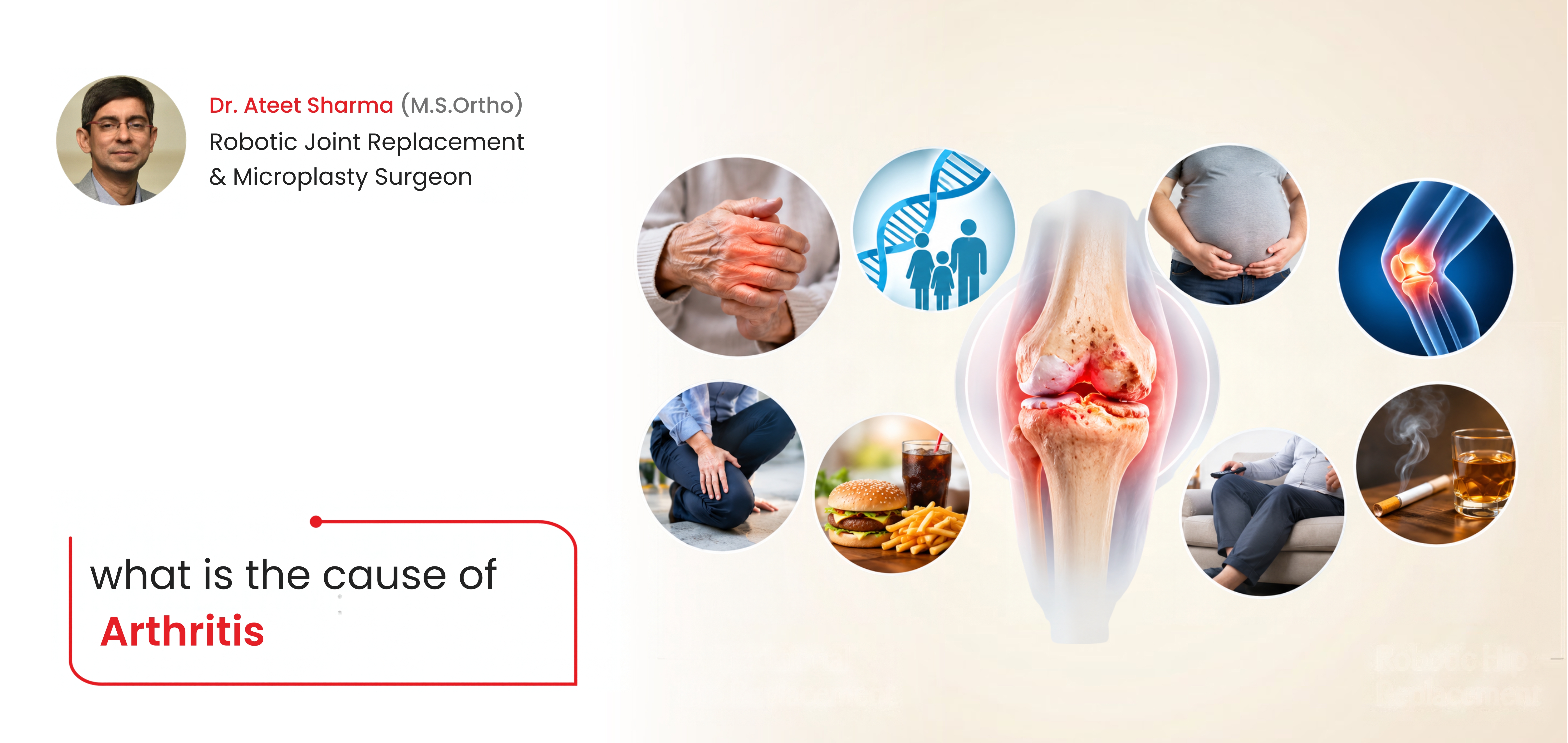
Arthritis isn't one single disease, worth pointing out. It's an umbrella term covering more than 100 conditions that affect joints and the tissue around them, and the causes shift depending on which type you're dealing with.
Depending on the type, arthritis can come from joint tissue damage, autoimmune activity, old injuries, genetics, infections, or metabolic issues.
Osteoarthritis and rheumatoid arthritis are the two most talked-about forms, but gout, psoriatic arthritis, and reactive arthritis are all part of the picture too.
Osteoarthritis is basically cartilage wearing thin over the years. Bones need that cushion to glide against each other without friction, and once it starts breaking down, you get the usual suspects, pain, stiffness, swelling, and joints that don't move the way they used to.
An old injury can leave a joint more vulnerable to arthritis down the line. Sports injuries, accidents, falls, and certain repetitive work injuries, any of these can set the stage for joint damage later.
Which is exactly why persistent pain after an old injury shouldn't be written off as "just ageing."
Jobs, sports, and everyday activities that involve a lot of bending, squatting, and lifting all put ongoing strain on particular joints.
That doesn't mean everyone doing this kind of work ends up with arthritis. But the risk increases, especially when you consider other factors.
If left alone, that inflammation just keeps building, causing swelling, pain, stiffness, and slowly damaging the joints. This is why catching rheumatoid arthritis early matters so much, the longer it goes untreated, the more damage sticks around permanently.
Arthritis can run in families, that's just how genetics work sometimes. If your mom or an uncle has it, that doesn't mean you're definitely going to get it or definitely not going to get it. But for a few types of arthritis specifically, having that family history increases your risk a little.
Extra weight puts more strain on weight-bearing joints, knees, and hips especially. Obesity also comes with biological changes that can feed into joint inflammation on its own.
So keeping weight in a healthy range is genuinely one of the more practical ways to protect your joints and manage symptoms.
Some types of arthritis tie directly into other health issues. Gout, for instance, happens when uric acid crystals build up in a joint. Arthritis can also show up alongside conditions like psoriasis or lupus. This condition is part of why nailing down the exact type matters before jumping into treatment.
Honestly, anyone can get arthritis, but some factors do increase the risk.
Common risk factors:
Having these risk factors doesn't guarantee arthritis, and plenty of people develop it with no obvious risk factor at all.
Joint pain, stiffness, swelling, warmth, or trouble moving a joint that lasts is worth getting checked, especially if it starts to interfere with daily life.
Common symptoms:
Rheumatoid arthritis in particular can bring on longer morning stiffness, fatigue, fever, or symptoms hitting several joints at once.
Managing arthritis really depends on the type, how severe it is, which joints are involved, and your overall health picture.
Getting evaluated early helps determine whether it's osteoarthritis, rheumatoid arthritis, gout, an injury, or something else entirely. For anyone looking into robotic arthritis treatment in Ahmedabad, Dr Ateet Sharma can assess your symptoms and point you toward the right care.
Dr Ateet Sharma
Phone: 9824061766
Depends entirely on the type. Could be cartilage wearing down, an autoimmune issue, an old injury, genetics, infection, or a metabolic problem, arthritis isn't one thing with one cause.
It's a factor, definitely, especially for osteoarthritis. But plenty of younger people get arthritis too, so age alone doesn't tell the whole story.
Yes, actually. Once a joint's been injured, it's more prone to developing osteoarthritis later on, sometimes years later.
Not completely, no, and it varies by type. Staying at a healthy weight, keeping active, quitting cigarettes, and being careful with your joints can lower some of the risk, though.
If joint pain, stiffness, or swelling keeps showing up and starts messing with your day-to-day, that's the point to see someone. Getting checked out early makes it easier to figure out what's actually going on.
© 2026 Dr.Ateet Sharma All rights reserved. | Manage by Nexus