



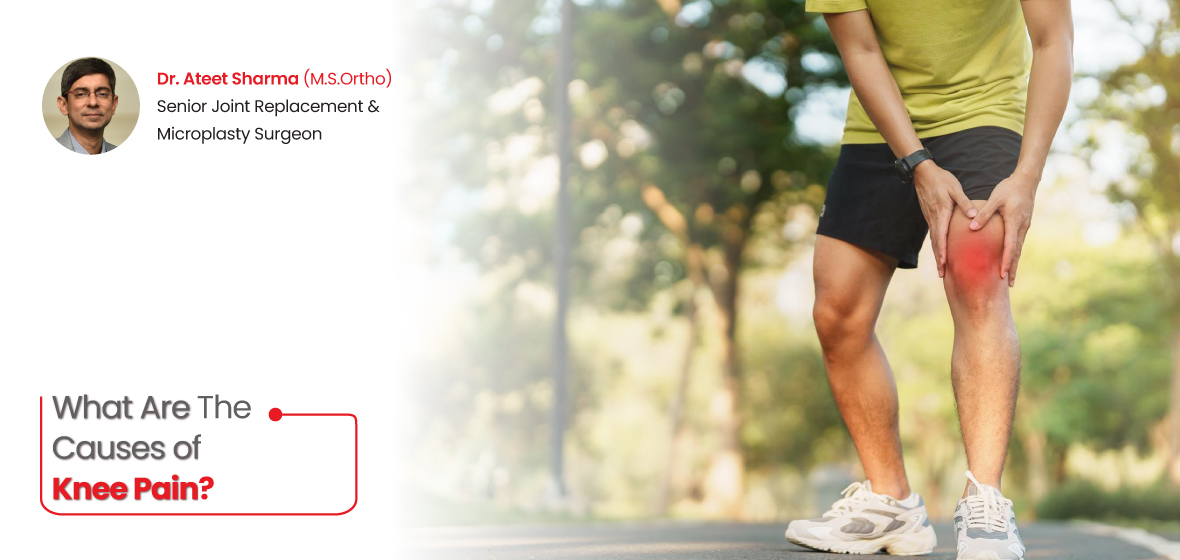
Knee pain is one of those issues that sort of creeps into your everyday life. One day, you’re moving up and down stairs without a thought, the next, everything reminds you that something isn’t right. When patients arrive to Dr Ateet Sharma for Knee Pain Treatment in Ahmedabad, what they often say is: “I don’t know what I did; it started hurting.” The reality is, knee pain isn’t single-sourced. It’s generally your body signalling through a small red flag that it needs some attention.
So let’s discuss the actual, everyday causes of knee pain in a simple, honest and practical manner.
Your knee is a highly prolific joint. It bears your body weight, flexes, extends, twists a little and absorbs shock every time you walk, run or jump. That’s a lot of responsibility. And so when something goes wrong, whether it’s wear and tear, an injury or poor posture, the knee is often the first to protest.
Injury is one of the leading reasons you may have knee pain. That’s not always a dramatic sports mishap. Sometimes it’s as simple as :
Common knee injuries are ligament strains (such as anterior or medial cruciate ligament tears), meniscus tears and muscle sprains. Long-term pain can even develop from a seemingly minor injury that barely hurt at first.
Pro Tip : If you’ve got persistent pain, swelling or instability for more than a few days, it’s time to have it checked out.
Our joints just wear out as we age. A major culprit here is osteoarthritis. The cartilage that insulates the knee will eventually wear away and begin to cause pain, stiffness and a frustrating, grinding sensation.
It doesn’t mean that knee pain is “normal” or something you should put up with. Early treatment, supervised exercise, and medical attention can slow progression by reducing pain.
Here’s a fact that many people aren’t aware of: with every additional kilo of weight in your body, your knees are subject to about three to four times as much pressure while walking. In time, this extra load can strain the joint and possibly lead to pain and arthritis.
Weight-induced knee pain doesn’t just appear overnight. It develops gradually, beginning for many as moderate discomfort and blossoming into constant pain if lifestyle changes are not made.
Strong muscles protect your knee. Weak muscles expose it.
When the muscles of the thigh, hip or calf are weak or imbalanced, the knee joint is left to do more than its share. It can result in things like patellofemoral pain syndrome, which involves pain around or behind the kneecap, particularly when climbing stairs or sitting for long periods.
The good news? It's easily one of the best reasons for knee pain relief with coaching and exercise.
Exercise is great. But, over-exercise is not the way.
Running long distances in shoes that have worn out, increasing the intensity of workouts too quickly, or doing certain activities over and over can cause overuse injuries, tendonitis and bursitis. These symptoms include a painful, swollen, and tender knee.
If your knee pain began when you started a new exercise routine, your body may be requesting rest, not more reps.
That knee injury, the one from all those years back? It may even be affecting your pain today.
Fractures that don’t heal as expected, ligament injuries or surgeries can all change how your knee moves. This errant movement pattern creates wear and tear on your joints and can cause pain. Several are surprised when they learn their current pain is related to something that happened long ago.
Some knee pain isn’t mechanical; it’s medical! Conditions like :
May lead to inflammation, swelling and pain in the knee. They tend to be associated with other symptoms, such as morning stiffness or redness, and necessitate professional evaluation.
Believe it or not, your knees are directly impacted by the way you sit down, stand and walk. Hours sitting still, poor posture while seated, flat feet or walking with bad alignment can slowly weaken the knee joint.
Over time, these habits alter the way force is distributed across the knee, causing pain in and of itself, without any injury.
Achy pain that disappears with rest is typical. But you should visit a knee surgeon if you notice :
Early detection not only leads to less suffering but also avoids long-term damage.
Knee pain is not something to continue ignoring or self-diagnosing for an extended period. Whether that is an injury, age-related deterioration, being overweight, weakened muscles, or simply belonging to the right age group for it, visit Dr Ateet Sharma. He will help you identify the reason behind your knee aches.
Knee pain can be managed with proper advice, lifestyle modifications, and appropriate professional management. Your knees get you around every day; it’s time to return the favour.
© 2026 Dr.Ateet Sharma All rights reserved. | Manage by Nexus